



Plant Closures Could Halt Heifer Expansion Before It Begins
Article Originally Published in the January 2026 Issue of the National Cattlemen Magazine


Report Snapshot
Situation
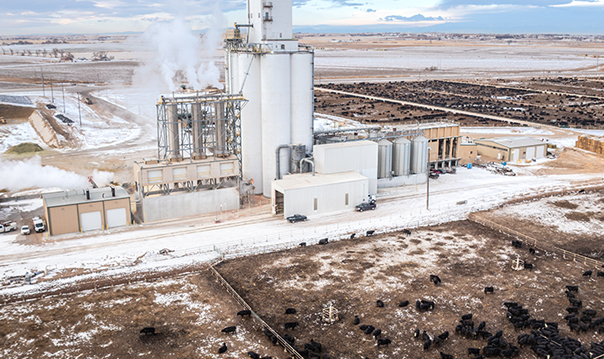
Tyson closing its beef processing facility in Lexington, Nebraska, and reducing production at the Amarillo, Texas, plant raises an important question: Is heifer retention needed at all?
Impact
If packers need fewer cattle, feed yards will be closer to meeting packers’ needs with existing supplies and will not need to buy as many feeder cattle from the cow/calf producers. That, in turn, disincentives cow/calf producers from expanding.
Outlook
The risk of additional plant closures is a threat to the market, with negative packer margins expected to continue.
Heifer retention still hasn’t started, and fed cattle slaughter capacity is starting to adjust down. With Tyson closing the beef processing facility in Lexington, Nebraska, and reducing production at the Amarillo, Texas, plant, it raises an important question: Is heifer retention needed at all?
November Cattle on Feed Report Gives Key Update
In previous publications, Terrain had projected the U.S. needed to rebuild the cow inventory by 2 million to 2.5 million head. That would rebuild the cow herd and still leave 1 million to 1.5 million head of available fed slaughter capacity for when needed.
However, the scale of the Tyson announcement in late November created an abrupt shift in the balance of fed cattle supply to fed slaughter capacity, calling into question the need for sizable heifer retention.
On November 21, the USDA released its monthly Cattle on Feed Report, as well as key numbers related to heifer retention. The initial market reaction was neutral to friendly, with results showing:
- Cattle on feed was reported at 98% of the previous year’s figure
- Placements were a bullish surprise at 90% of last year’s number
- Marketings were in line with expectations at 92% of the prior year’s figure
The USDA surprised the market by backfilling the data from the October report that was feared to be lost. Even more important, the USDA added the quarterly sex breakdown in the October numbers.
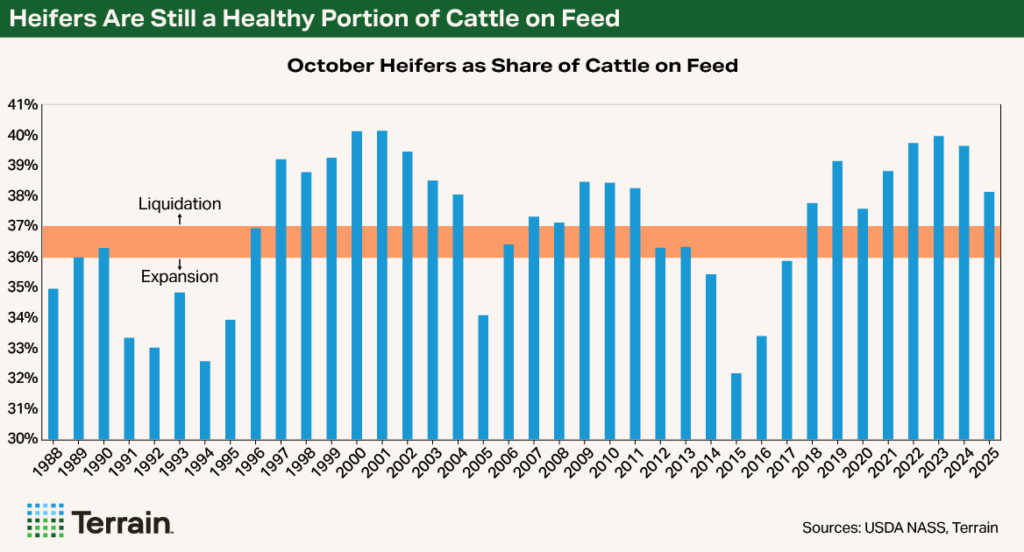
Because of the anticipation of heifer retention, the third-quarter sex breakdown was critically important. Without it, the market would not have the updated number of heifers on feed until the January 2026 report. Heifers on feed at the end of the third quarter were at 4.355 million head, or 31.1%, the same as at the end of the second quarter and 1.6% below the third quarter of 2024. The report confirmed that heifer retention has not started in earnest.
Dairy Helps Paint the Whole Picture
It becomes even more complicated as we turn to total cattle production and focus on what’s happening on the dairy side, too.
During the current cattle cycle, dairy cows peaked in 2018 at 9.432 million head and beef cow numbers peaked in 2019 at 31.691 million head. This is the seventh and eighth year of cow liquidation, driven by poor economic returns to cow/calf and dairy producers. Over that period, we saw tremendous drought and economic stress — plus the development and acceptance of beef-on-dairy calves, which provided a much-needed feeder supply but tightened dairy replacements.
Through the seven to eight years of liquidation, the average age of the cow herd has likely gotten older, with insufficient females being added to the mix. Simply stated, the industry hasn’t been putting replacement females back into the herd at the rate of liquidation and attrition. The cow herd is getting old and will apparently get older before heifer retention begins in earnest. I expect the attrition rate to accelerate as cows age out and become more vulnerable to injury and sickness.
Squeezed on All Sides: Risks for 2026
If the decline in fed slaughter capacity has balanced the need for sizable heifer retention, that poses a challenge. The threat of total cattle supply shrinking further could escalate, making infrastructure contraction more likely. The risk of additional plant closings is a threat to the market, with negative packer margins expected to continue. Stabilizing and rebuilding the industry with a contracting infrastructure becomes a mega challenge.
Now comes an even bigger challenge: Rebalancing fed cattle numbers to our new slaughter capacity risks further erosion in the beef herd size.
If packers need fewer cattle, feed yards will be closer to meeting packers’ needs with existing supplies and will not need to buy as many feeder cattle from the cow/calf producers. That, in turn, disincentives cow/calf producers from expanding, and they hold on to the same aging cows. As a result, industry and infrastructure contractions become a higher risk and profit stagnation could set in from the top to the bottom of the value chain.
Terrain content is an exclusive offering of AgCountry Farm Credit Services,
American AgCredit, Farm Credit Services of America and Frontier Farm Credit.