



Outlook • February 25, 2026
Lower-Carbon Rules, Higher Fuel Prices for California Producers
Low Carbon Fuel Standard Update: California Edition




Report Snapshot
Situation
California has the highest fuel prices of any state, averaging $4.86 per gallon of diesel, compared with the national average of $3.53. Though higher prices are the result of several factors, the state’s Low Carbon Fuel Standard (LCFS) is a significant one. Recent LCFS changes will particularly affect the state’s agricultural supply chain, which is highly reliant on fuel.
Outlook
California’s agricultural producers and processors should anticipate higher, more volatile fuel costs as LCFS rules tighten.
Impact
Producers may want to consider electrification, boost fuel efficiency, secure fuel contracts, and streamline logistics to mitigate rising energy expenses.
Under the Hood: California’s Fuel Costs
California has the highest fuel costs of any state. Contributing factors include the highest gasoline taxes in the country — at nearly 71 cents per gallon, versus the national average of 33 cents, according to the Tax Foundation — and its distance from the Gulf Coast refining region.
However, California’s unique regulatory framework that combines a cap-and-trade program1 with many other initiatives is especially key to the state’s exceptionally high fuel costs. One of these regulatory programs is the Low Carbon Fuel Standard (LCFS).
Launched in 2011 as part of the state’s decarbonization efforts, LCFS is an emissions trading scheme for transportation fuels. LCFS rates each fuel against a carbon-intensity target based on lifecycle emissions per unit of energy. Cleaner fuels earn credits; dirtier fuels rack up deficits.
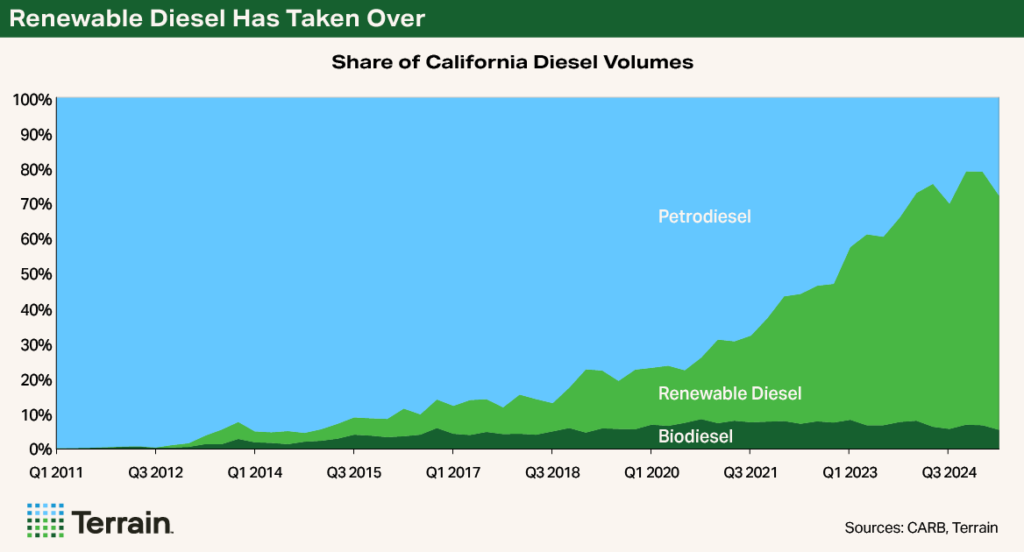
The program has been successful in changing the fuel landscape in the state. Since its implementation, the program has overperformed, meaning more credits have been generated relative to demand, pushing down the credit price. A high number of credits to date have been generated by biofuels and specifically renewable diesel, which now makes up nearly 70% of diesel volumes.
To date, the total effect of the program on retail gasoline prices has been largely minimal. Refinery cost breakdowns, which are required to be reported by refineries per Senate Bill 1322, show that the program has typically added anywhere from 5 to 8 cents per gallon. To put this in perspective, crude oil costs add around $2 per gallon, refining and distribution margins add about $1.50, and the state’s cap-and-trade program adds around 20 to 30 cents.
Although refineries are not required to report diesel cost breakdowns under the law, LCFS costs for diesel are probably higher because diesel has a higher carbon intensity and, therefore, generates more LCFS deficits than gasoline.
However, in response to criticism by environmentalists that the program has been too lenient, the California Air Resources Board (CARB) adopted major changes to LCFS in July 2025. These changes raise important questions about how California’s fuel environment will evolve, and the impact on the agricultural supply chain in California, which is heavily reliant on fuel.
Three changes are particularly significant:
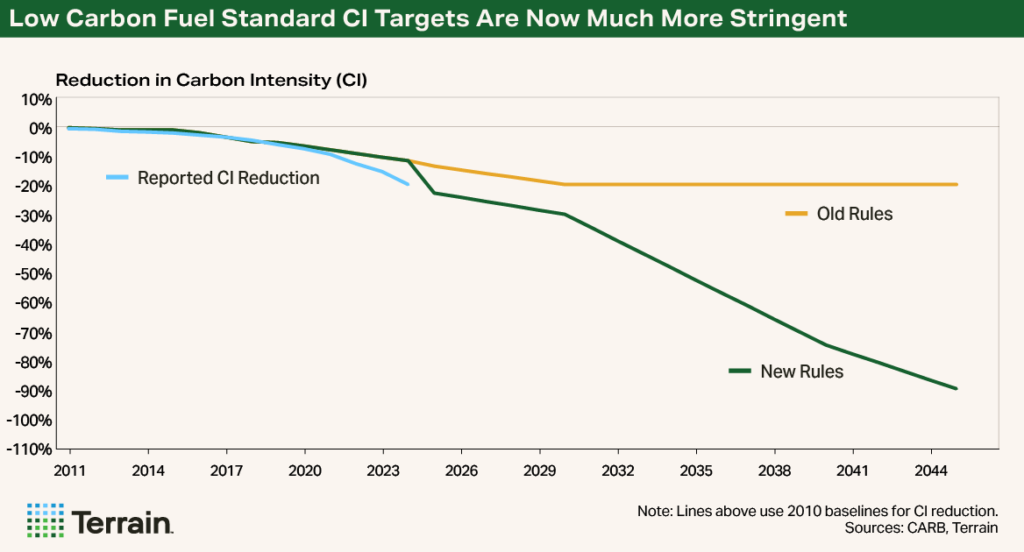
- Stricter Carbon-Intensity Reduction Goals: The carbon-intensity reduction target is now 90% by 2045, with an auto-acceleration mechanism that makes the targets stricter if there’s an oversupply of credits. This is up from the previous goal of 20% by 2030.
- Adoption of CA-GREET 4.0: Starting July 1, 2025, new applications must use the CA-GREET 4.0 model; all fuel producers must comply by January 1, 2027. This means higher carbon-intensity scores and fewer credits for fuels made from soybean, canola and sunflower oils.
- Limits on Crop-Based Renewable Diesel: CARB has set a 20% cap on crop-based biofuels in annual diesel reporting, effective January 1, 2028, with current pathways exempt until then.
Reforms Likely to Rev Up Fuel Costs
Predicting the state’s fuel markets, however, requires caution. LCFS reforms are only one of several forces reshaping California’s energy landscape, and many of these pressures move in conflicting directions. Refinery closures, the potential expansion of E15, the rise of electric vehicles, volatility in credit markets, and broader economic conditions all interact with LCFS in ways that are difficult to model precisely.
Even so, the implication for California’s agricultural producers and processors is increasingly clear.
Agricultural producers and processors in California should expect modest fuel cost inflation.
Although LCFS has historically contributed only modestly to retail fuel prices, the program’s cost impact began rising even before the new amendments took effect. LCFS-related costs climbed from around 10 to 11 cents per gallon in late 2024 to about 19 cents by early 2025, largely driven by expectations of tighter rules and a credit market adjusting to new compliance obligations.
One analysis published in 2024 by the University of Pennsylvania predicted that the combined effect of the amendments could add about 65 cents per gallon of gasoline in the near term, increasing to approximately 85 cents by 2030 and approaching $1.50 per gallon by 2035. Though this analysis focused on gasoline prices, diesel price increases are generally expected as well. Therefore, agricultural producers and processors in California should expect modest fuel cost inflation.
Preparing for a Long and Winding Road
Given these changes, California’s agricultural industry must plan carefully for the future.
While much about California’s fuel future is unpredictable, producers can take proactive steps to navigate the evolving environment.
Agricultural producers and processors should anticipate higher, more volatile fuel costs as LCFS rules tighten. While price effects are still uncertain, early signs point to increases. Producers may want to consider electrification, boost fuel efficiency, secure fuel contracts, and streamline logistics to mitigate rising energy expenses.
While much about California’s fuel future is unpredictable, producers can take proactive steps to navigate the evolving environment. Thoughtful planning, careful investment decisions, and strategic market positioning will be essential tools as the LCFS landscape continues to shift.
(Read “California’s Shifting Fuel Rules Pose Hurdle for Grain Producers” to learn about the impact of the recent LCFS changes on Midwest agricultural producers.)
Endnote
1California's cap-and-trade program puts a price on emissions by setting a statewide cap and issuing allowances for emitters above a certain threshold.


Terrain content is an exclusive offering of AgCountry Farm Credit Services,
American AgCredit, Farm Credit Services of America and Frontier Farm Credit.